Description
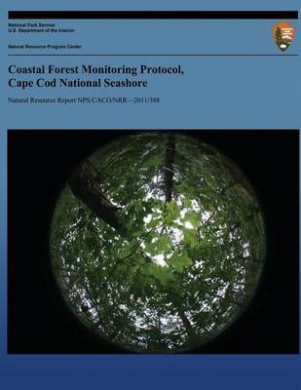
Background and History Although Cape Cod National Seashore (CACO) is perhaps best known for its shoreline scenery, the interior forests and woodlands have become the most prominent feature of this coastal landscape. In the period before European settlement, Cape Cod was covered largely by pine-oak forests, interspersed with smaller areas of hickory (Carya spp.), beech (Fagus grandifolia), red maple (Acer rubrum), and birch (Betula spp.) (Motzkin et al. 2002). In the 18th and 19th centuries, much of Cape Cod consisted of open heathlands and grasslands created and maintained primarily by the agricultural practices of early settlers that included cutting, grazing, and burning (Eberhardt 2001, Eberhardt et al. 2003). The cessation of these activities by the mid-1800’s allowed trees to re-invade the landscape (Patterson et al. 1983, Motzkin et al. 2002, Parshall et al. 2003), and forests now occupy the largest land-surface area and biovolume of any vegetation community (Figure 1).