Description
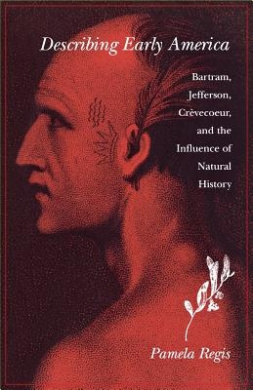
Describing Early America is a study of William Bartram’s Travels, Thomas Jefferson’s Notes on the State of Virginia, and J. Hector St. John de Crevecoeur’s Letters from an American Farmer that situates them within two important intellectual traditions: the literature of travel and the science of natural history. Pamela Regis contends that the travel genre provided the narrative framework on which these texts were built, but that natural history offered much more: a way of looking at the world, a way of describing what the authors saw, and an overarching scheme in which to fit what they had seen. During the eighteenth century, natural history was understood to encompass a broad range of scientific inquiry. Natural historians took for their subject matter all of what they called Creation and approached it through a single methodology. At the center of this methodology was the Linnaean system of describing and naming plants and animals, classifying them, and locating them along the Great Chain of Being. In Linnaeus’s scheme the natural order is static and timeless.