Description
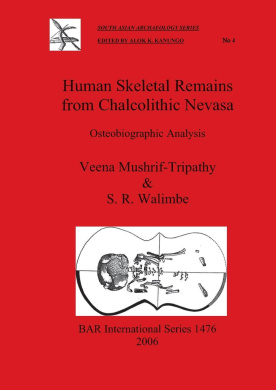
This work examines human skeletal finds from Nevasa, India, in the light of the new knowledge available. More than 131 burials were uncovered from the site between 1954 and 1961. All burials belong to the Chalcolithic period except one, which comes from the Indo-Roman level. The previously unstudied osseous remains of 75 immature individuals recovered from the site of Nevasa comprise the main subject matter of the present research. In order to draw a concise picture of the bio-cultural adaptations of these agro-pastorals (and Deccan Chalcolithic populations in general) it was necessary to thoroughly examine all the immature and fragmentary elements recovered. The study covers demography, phenotype, dentition and pathology, yielding insights about the make-up, life and diet of the community under study, comparisons between the Deccan Chalcolithic, Southern Chalcolithic and Harappan populations, population stress and causes of death.