Description
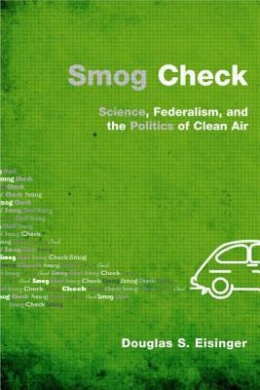
When federal and state governments battle over environmental regulations, whose approach should prevail? During the 1990s, shortly after passage of the Clean Air Act Amendments, a controversial U.S. EPA mandate led to an intense conflict between federal regulators and the state of California. The disagreement pitted EPA’s required overhaul of auto emissions testing against California’s desire to keep and improve its existing test program – popularly called ‘Smog Check’. The conflict nearly upended the Clean Air Act and triggered dramatic policy shifts throughout the United States. The debate over Smog Check ended when EPA finally granted California, and the rest of the nation, greater regulatory flexibility. Fundamental to the Smog Check controversy were questions about federal versus state authority as well as battles between colorful personalities. In his new book, Smog Check, Douglas S. Eisinger presents these struggles in fascinating, first-hand detail. Eisinger, an EPA official at the time of this conflict, probes deeply into the issues and explores broader questions including: when does it become imperative for agencies to bargain with one another, when should regulatory flexibility and performance-based regulations be favored over command and control approaches, what should be done when decisions need to be made in the face of scientific disagreement about both the scope of a problem and the effectiveness of different solutions? He concludes the book with commentary from other former EPA officials who were participants in the Smog Check controversy. The lessons drawn from the Smog Check debate have wide-ranging applicability and inform problem-solving for climate change and numerous other environmental issues. Engaging reading for students interested in intergovernmental relations and regulatory reform, the book also provides insight for policy professionals involved in environmental protection whenever it involves coordination between federal and state or local agencies.